Post Frame Building Basics: What Every Buyer Needs to Know
A comprehensive introduction to post frame construction — what it is, how it works, where it excels, and what to look for when purchasing a post frame building package.
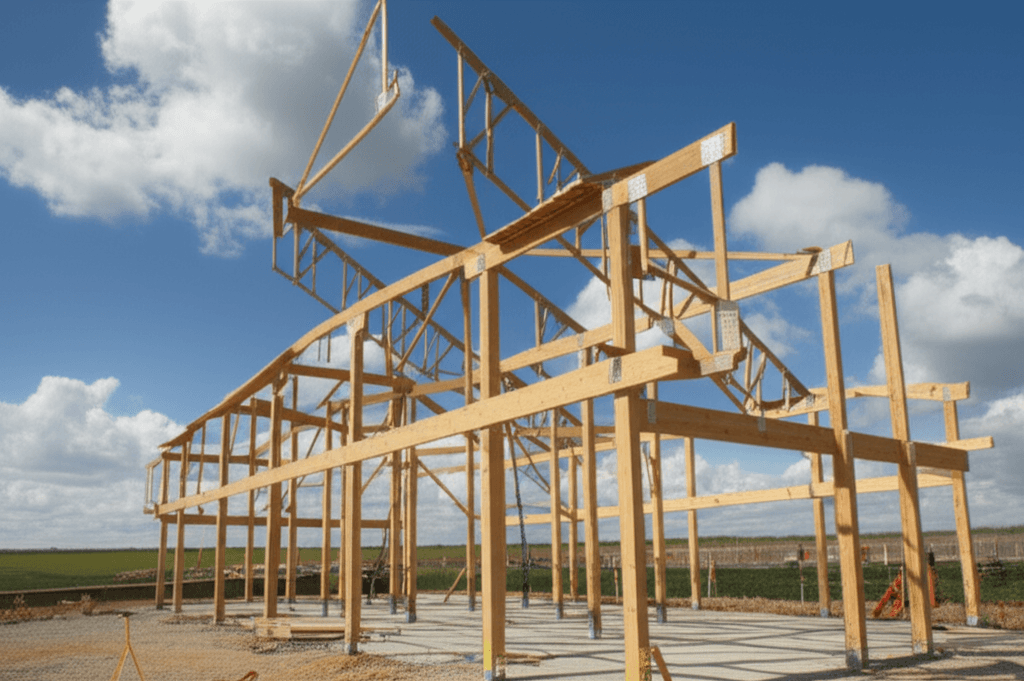
What Is Post Frame Construction?
Post frame construction is a building method that uses large, evenly spaced structural columns (posts) as the primary load-bearing elements. These columns are either embedded directly in the ground, set on concrete piers, or bolted to a concrete slab. Engineered roof trusses span between the columns, and non-structural wall panels (typically steel) enclose the building.
This approach has been used for agricultural buildings since the 1930s and has evolved into a versatile construction method used for garages, shops, commercial buildings, churches, retail stores, equestrian facilities, and homes (barndos).
The key distinction from conventional framing: the walls do not carry the roof load. The columns carry everything. This means the interior can be completely open — no load-bearing walls, no support posts, no compromises on floor plan.
How Post Frame Construction Works
The Structural System
A post frame building has four primary structural components:
-
Columns. Pressure-treated wood (typically 6x6 or laminated) set in the ground or on piers. Spaced 8 feet on center for most buildings. These carry all vertical loads (roof, snow, wind uplift) and resist lateral forces (wind).
-
Trusses. Engineered wood or metal plate-connected trusses that span the full width of the building. Trusses sit on top of the columns and create the roof profile (gable, gambrel, monitor, single-slope).
-
Purlins and girts. Horizontal framing members that connect the trusses (purlins on the roof) and columns (girts on the walls). These provide the attachment surface for panels.
-
Panels. Steel roof and wall panels screw to the purlins and girts. They provide the weather barrier and contribute to the building's lateral resistance (diaphragm action).
The Construction Sequence
Building a post frame structure follows a logical, efficient sequence:
- Set columns. Auger holes, place columns, backfill and compact (or set on piers/brackets).
- Install trusses. Lift trusses onto columns, brace temporarily.
- Attach purlins and girts. Frame the roof and wall planes.
- Hang roof panels. Start from the eave and work up to the ridge.
- Hang wall panels. Start from the base and work up.
- Install trim. Corners, eave, ridge, base, and door frames.
- Hang doors. Overhead doors and walk doors.
A small crew can complete a 30x40 building in 3 to 5 days. Larger buildings take proportionally longer.
Advantages of Post Frame Construction
Cost Efficiency
Post frame buildings typically cost 30 to 50 percent less than comparable conventional buildings. The savings come from:
- Fewer foundation points (no continuous perimeter footing)
- Fewer framing members (columns at 8-foot spacing vs. studs at 16-inch spacing)
- Steel panels that serve as both structure and weather barrier (no separate sheathing and siding)
- Faster construction time (less labor cost)
Clear-Span Interiors
Because the columns carry all loads, the interior is completely open. A 60-foot-wide post frame building has 60 feet of unobstructed floor space. This is the primary reason post frame is chosen for workshops, vehicle storage, agricultural equipment, and commercial use.
Conventional framing struggles with clear spans over 24 feet without engineered beams and headers. Post frame handles 60, 80, even 100-foot clear spans with properly engineered trusses.
Construction Speed
Post frame buildings go up faster than any other construction method. The large-scale components (columns, trusses, full-length panels) cover a lot of area per piece, and the assembly sequence minimizes time on the job site.
For DIY builders, post frame is the most accessible method for constructing a large building. The components are designed for efficient assembly, and manufacturers provide detailed instructions.
Versatility
Post frame construction works for virtually any building type:
- Agricultural: Equipment storage, hay barns, livestock shelters, grain storage
- Residential: Garages, workshops, barndos, guest houses
- Commercial: Warehouses, retail stores, restaurants, churches, fitness centers
- Equestrian: Riding arenas, horse barns, hay storage
- Industrial: Manufacturing floors, distribution centers
Foundation Flexibility
Post frame buildings can be built on almost any surface: concrete slab, gravel pad, compacted fill, or bare ground. This eliminates the need for expensive continuous foundations in many applications.
For garages and shops, many owners pour a concrete slab for the floor but set the columns independently in the ground outside the slab edge. This separates the structural system from the floor, reducing cost and complexity.
What to Look for in a Post Frame Building Package
Not all building packages are created equal. Here is what to verify before purchasing:
Engineer-Stamped Plans
Every post frame building should come with plans stamped by a licensed professional engineer for your specific location. The plans should account for:
- Local snow load
- Wind speed and exposure category
- Seismic zone
- Soil conditions (if columns are embedded)
Generic plans that are not location-specific may not meet your local building code, which means they will not pass inspection.
Column Quality
Columns should be pressure-treated to UC4A (Use Category 4A) standards for ground contact. Lesser treatments will not hold up to ground moisture and will rot prematurely. Verify the treatment tag on every column.
Laminated columns (multiple boards glued together) are stronger than solid-sawn columns of the same size and resist checking (splitting) better.
Truss Engineering
Trusses should be designed by a licensed truss engineer and manufactured in a facility with quality control. Each truss should have a design drawing specifying the loads it is rated for. Never use generic or field-fabricated trusses for a building you intend to keep long-term.
Steel Panel Specifications
Look for:
- Gauge: 26 gauge for commercial and agricultural; 29 gauge acceptable for residential garages and sheds
- Paint system: Kynar 500 (PVDF) is the premium standard with a 40-year fade warranty. SMP (silicone modified polyester) is acceptable for agricultural use
- Substrate: Galvalume (aluminum-zinc coated steel) is standard and provides excellent corrosion resistance
- Profile: Standard rib panels (PBR or AG panel) are the most common. Standing seam is available as a premium upgrade.
Connection Hardware
The connectors between columns, trusses, purlins, and girts are critical for structural performance. Look for:
- Engineered steel brackets at column-truss connections
- Proper hurricane ties and hold-downs where required by code
- Grade 5 or better bolts at critical connections
- Self-drilling screws rated for the panel gauge and substrate
Assembly Documentation
A good building package includes:
- Complete framing plan showing column layout, truss spacing, and bracing
- Panel layout showing panel lengths, overlap, and screw patterns
- Door framing details
- Trim installation sequence
- Foundation plan (even if it is just column hole locations and depths)
Common Mistakes to Avoid
-
Buying on price alone. The cheapest package often uses lighter gauge steel, lower treatment grade columns, and generic (non-engineered) plans. The money you save upfront will cost you more in repairs and replacements later.
-
Ignoring the building site. Poor drainage, uncompacted fill, or organic soil under the building will cause problems for decades. Invest in proper site preparation before the first column goes in.
-
Undersizing the building. Build 20 percent bigger than you think you need. You will fill the space. Adding on later costs more per square foot than building bigger from the start.
-
Skipping insulation planning. If there is any chance you will want to heat or cool the building in the future, install a vapor barrier and design the framing to accommodate insulation from the start. Retrofitting insulation into a finished building is expensive and difficult.
-
Not checking local codes. Verify building permit requirements, setback rules, and zoning restrictions before ordering. Some jurisdictions have restrictions on metal-sided buildings in residential zones.
Get Started
Understanding post frame construction is the first step. The next step is seeing what your building looks like. Browse our designs to see pre-configured options across every building type, or use the configurator to build something from scratch. Every PoleBarnes package includes engineer-stamped plans, commercial-grade materials, and complete assembly documentation.
Your building starts here.