How to Choose a Pole Barn Kit vs. Custom Build
Compare the pros and cons of pre-designed pole barn kits against fully custom post frame buildings. Learn which approach fits your needs, budget, and timeline.
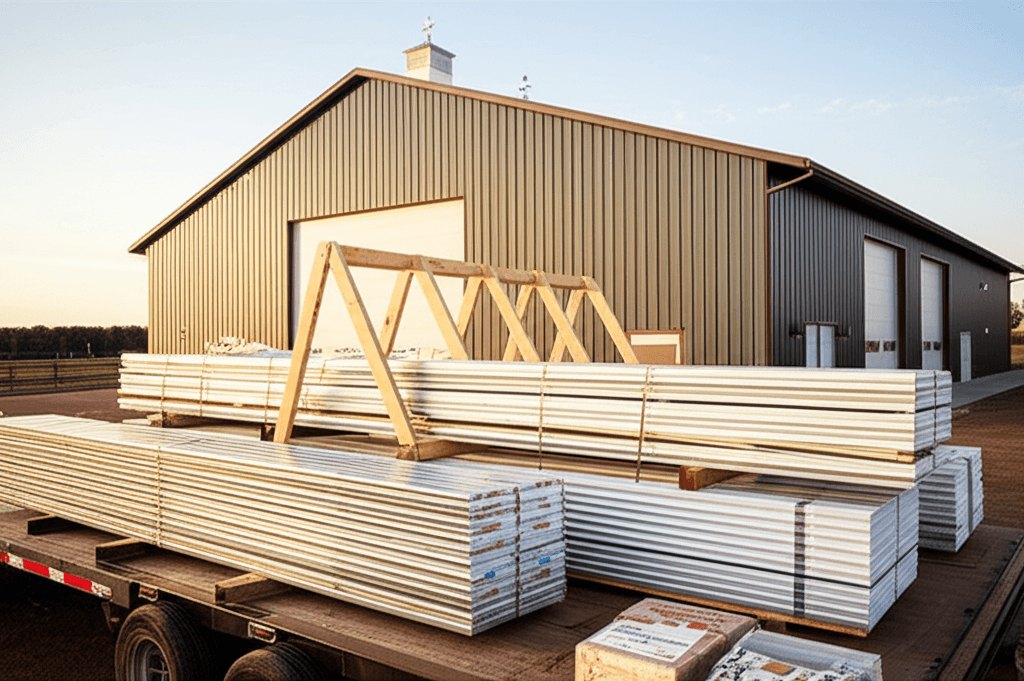
The Choice Every Builder Faces
You have decided on a post frame building. The next question is: do you start with a pre-designed kit (a standard configuration you can buy off the shelf) or go fully custom (designing every dimension, door, window, and detail from scratch)?
The answer depends on your priorities. Neither option is universally better — each has clear advantages and specific situations where it makes the most sense.
What Is a Pole Barn Kit?
A pole barn kit — sometimes called a building package or materials package — is a pre-designed, pre-engineered set of components for a specific building configuration. You choose from established sizes (30x40, 40x60, 40x72, etc.) with standard features, and the manufacturer produces the package to that specification.
Kits include everything you need to erect the structural shell: columns, trusses, steel panels, doors, trim, fasteners, and engineered plans. They are designed to be ordered quickly, manufactured efficiently, and erected without surprises.
On PoleBarnes, our building designs are essentially kits — pre-configured starting points that you can order as-is or customize through the configurator.
What Is a Custom Build?
A custom build starts from a blank canvas. You (or a designer working with you) specify every dimension, structural detail, and feature from the ground up. The building is engineered specifically for your requirements, and the materials are produced to your one-of-a-kind specification.
Custom builds are common for projects with unusual requirements: odd lot shapes, extreme spans, specialized loading (overhead cranes, mezzanines), mixed-use configurations (shop and living space), or aesthetic requirements that standard kits do not address.
Kits: The Advantages
1. Lower Cost
Pre-designed kits cost less because the engineering is already done. The manufacturer has optimized the design for material efficiency, truss production, and panel layout. They are not starting from scratch — they are producing a proven configuration.
For a standard 40x72 shop, the difference between a kit and a fully custom build of similar size can be $3,000 to $8,000 in engineering and design fees alone.
2. Faster Turnaround
Because the engineering is pre-done, kits move from order to production faster. A standard kit can be manufactured and shipped in 2 to 3 weeks. A custom build may take 4 to 8 weeks from design approval to shipment because each project needs unique engineering calculations, truss designs, and plan sets.
If you need a building by a specific date, kits give you the shortest path.
3. Proven Designs
Kits have been built hundreds or thousands of times. The designs are field-tested. The assembly sequence is documented. The material list is verified. You are not the first person to build this building, which means the manufacturer has already resolved any issues.
Custom builds, by definition, are first-of-a-kind. There is a higher chance of field issues — a truss that does not quite fit, a panel that needs trimming, or a door framing detail that requires modification.
4. Easier Permitting
Engineer-stamped plans for standard kits are typically processed quickly because the structural system is well-understood. Building officials who have seen hundreds of 30x40 post frame garages know exactly what they are looking at.
Custom designs — especially those with unusual spans, mixed-use occupancy, or non-standard structural features — may face additional scrutiny from plan reviewers.
5. Better for DIY Builders
If you are erecting the building yourself, a standard kit with detailed assembly instructions is much more DIY-friendly than a custom design. Kit instructions are written for the specific configuration and include step-by-step illustrations, tool lists, and common troubleshooting tips.
Custom builds typically come with general post frame erection guidance and engineering drawings that assume some construction experience to interpret.
Custom Builds: The Advantages
1. Exact Fit for Your Needs
The most obvious advantage: a custom build matches your requirements exactly. If you need a 42x67 building with 15-foot walls, three 12-foot overhead doors on one side, two 10-foot doors on the other, a 16-foot lean-to, and a lofted office area — a custom design delivers exactly that.
Kits require you to round to the nearest standard size and work within available options. Sometimes that means paying for space you do not need or compromising on door placement.
2. Unusual Site Conditions
If your building site has constraints — an irregular shape, significant slope, adjacent structures that limit clear distances, or unusual soil conditions — a custom design can accommodate them. Standard kits assume a flat, rectangular, unobstructed site.
3. Mixed-Use Configurations
Barndos and other mixed-use buildings (shop and office, retail and warehouse, barn and living quarters) almost always require custom design work. The structural transitions between zones, the plumbing and electrical coordination, and the code compliance for mixed-occupancy buildings are beyond what standard kits address.
4. Premium Aesthetics
If your building needs to look like something other than a standard pole barn — curved rooflines, custom cupolas, complex trim details, stone or brick veneer, or specific architectural proportions — a custom design is the path.
5. Specialized Loading
Buildings with overhead cranes, heavy mezzanine loads, specialized equipment anchoring, or unusual roof-mounted equipment need custom engineering. Standard kits are designed for standard loads.
When to Choose a Kit
Choose a kit when:
- Your building is a standard size (30x40, 40x60, 40x72, etc.)
- The primary use is straightforward (garage, shop, equipment storage, hay barn)
- Your site is flat and rectangular with no unusual constraints
- Budget and speed are priorities
- You plan to build it yourself and want clear instructions
- You want a proven design with minimal risk
When to Choose Custom
Choose a custom build when:
- Your required dimensions do not match standard sizes
- The building is mixed-use (shop and living space, retail and warehouse)
- Your site has unusual constraints (irregular shape, significant slope, tight setbacks)
- You need specialized engineering (crane loads, heavy mezzanines, extreme climate zones)
- Aesthetics matter and standard kit options do not meet your design vision
- You are working with a designer or architect who wants full control over the specification
The Best of Both Worlds: Configurable Kits
The fastest-growing segment of the market is the configurable kit — a pre-designed starting point that you can customize within defined parameters. You start with a proven design (for example, a 40x72 shop) and then adjust colors, door count and placement, wall height, add-ons, and features through an online configurator.
This is the approach PoleBarnes takes. Our building designs are not fixed, take-it-or-leave-it kits. They are starting points for the configurator, where you can adjust the design to match your needs while staying within the engineering parameters of a proven structural system.
The result: you get the cost savings and speed of a kit, with the flexibility to tailor the building to your specific requirements.
Questions to Ask Before Deciding
-
Is my required size within 10 percent of a standard kit size? If yes, a kit is probably the right choice. If your building is significantly different from any available kit, go custom.
-
Do I have unusual loading requirements? Cranes, mezzanines, and heavy equipment require custom engineering.
-
Is the building mixed-use? If it includes living space, offices, or retail, you likely need custom work.
-
What is my timeline? If you need the building in 4 weeks, a kit is your only realistic option.
-
Am I building it myself? DIY builders benefit significantly from the clear documentation and proven assembly sequence of standard kits.
Start Exploring
Browse our building designs to see standard configurations across shops, garages, barndos, ag buildings, sheds, and commercial structures. Use the configurator to adjust any design to your needs. And if your project truly requires a custom approach, connect with a designer from our marketplace who can create a one-of-a-kind design from scratch.
Either way, you start with a visual preview and an instant price estimate — no phone calls, no salespeople, no weeks of waiting.